
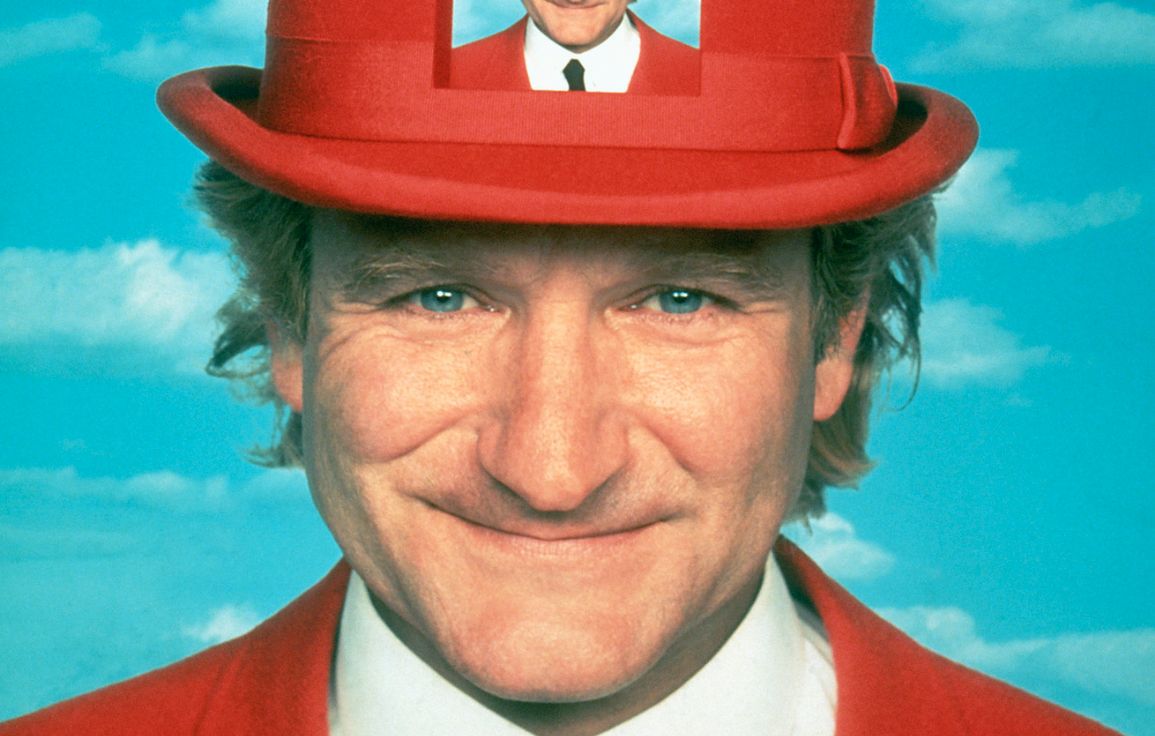
When Barry Levinson released “Toys” in 1992, audiences saw an eccentric comedy wrapped in bright colors and surreal humor. Decades later, many viewers are revisiting the film and discovering that its vision of technology-driven warfare now feels remarkably close to reality.
For years, “Toys” was regarded as one of Hollywood’s most unusual commercial misfires, a film directed by Barry Levinson and featuring Robin Williams, Joan Cusack, LL Cool J and Michael Gambon that entered the crowded early‑1990s holiday season buoyed by major studio support and lofty expectations, yet, even with its notable cast, bold production design and inventive visuals, it ultimately faced both critical resistance and lackluster box office results.
Over time, the film gradually slipped out of mainstream awareness and became increasingly elusive on contemporary streaming services. In contrast to many cult favorites that steadily resurface through TV reruns or digital platforms, “Toys” virtually vanished from public discourse for years. Yet the spread of online clips and conversations across social media has unexpectedly revived interest in the movie, particularly as global conflict now relies more heavily on drones, remote systems, and gamified military technology.
Many viewers now believe the movie anticipated aspects of modern conflict long before they became part of daily headlines. What once looked absurd or exaggerated in 1992 now appears unsettlingly plausible in an era defined by artificial intelligence, virtual simulations and inexpensive remote-controlled weapons.
The renewed fascination with “Toys” is not only tied to nostalgia. It reflects a broader cultural realization that many themes explored in the film have become deeply relevant in contemporary society. Its surreal vision of children interacting with militarized video games and remote combat systems no longer feels like pure fantasy. Instead, it resembles the technological direction warfare has increasingly taken during the past two decades.
A film that blended innocence with militarization
At its core, “Toys” presents a deeply unusual premise. The story centers on a whimsical toy factory inherited by a military-minded executive named Leland Zevo, who gradually transforms the playful business into a secret weapons development operation.
What initially begins as harmless experimentation with toy-like military devices eventually evolves into something far more disturbing. The character becomes obsessed with creating smaller, cheaper and more technologically efficient tools for warfare. Hidden inside the colorful aesthetic of the film is a sharp critique of how entertainment technology and military innovation can slowly merge together.
A standout sequence in the film portrays children unknowingly taking part in simulated warfare via immersive video systems, convinced they are merely enjoying arcade-like games while, in reality, they are being conditioned to operate destructive machines from a distance. The boundary between play and real violence gradually dissolves until the young participants can no longer grasp the true impact of what they are doing.
At the time the film debuted, many viewers considered these ideas strange, as video game technology remained fairly rudimentary by modern standards and the notion of remote combat managed through on‑screen interfaces felt overstated, yet Barry Levinson later noted that he drew inspiration from early tech innovations already taking shape in the late 1980s and early 1990s.
Computers were becoming increasingly widespread, remote-control technologies were swiftly advancing, and gaming culture was starting to shape the wider entertainment world. Levinson noted that the film was never meant as a direct forecast of what lay ahead; rather, it examined what might unfold if existing technological trends kept progressing without ethical boundaries.
Why the film was misunderstood in its time
When “Toys” debuted, numerous critics and viewers found it difficult to classify, as the film blended fantasy, satire, dark humor and anti‑war themes in a way that left audiences puzzled, especially those anticipating a more traditional Robin Williams comedy.
Its visual presentation further fueled the confusion, as the film showcased pastel-toned sets, surreal architecture, and dreamlike moments that echoed abstract theater rather than conventional Hollywood narratives, leading some viewers to read its playful design as a sign that it was aimed mainly at children, despite its strongly political and philosophical themes.
Barry Levinson later noted that audiences in the United States struggled to connect with the film’s surreal elements, while viewers across Europe tended to welcome its unconventional mood and layered symbolism; in several countries, critics approached the movie as a piece of absurdist art and satire rather than as mainstream family entertainment.
The movie’s failure also arrived during a period when Hollywood audiences generally preferred more straightforward action films and comedies. The early 1990s were dominated by blockbuster formulas that relied on clear genre expectations. “Toys” refused to fit neatly into any category.
Despite the commercial disappointment, the film gradually developed a small but loyal following among viewers who appreciated its originality and willingness to experiment. Over the years, critics began reassessing certain aspects of the movie, particularly its visual ambition and thematic relevance.
Today, many conversations about “Toys” now center less on how it debuted at the box office and more on how precisely it portrayed emerging fears about technology, media, and modern warfare.
The growing prevalence of drone-based warfare and long‑distance conflict
One reason the movie still strikes such a powerful chord today is that military operations have dramatically evolved throughout the 21st century, as modern warfare now leans heavily on drones, automated systems and remotely operated technologies that minimize the necessity for soldiers to face combat directly.
Conflicts in regions such as Ukraine and the Middle East have demonstrated how relatively inexpensive drones can alter the balance of military power. Small unmanned aerial vehicles are now capable of surveillance, targeted attacks and strategic operations that once required enormously expensive aircraft and large crews.
This echoes one of the core themes examined in “Toys”: the cost‑effectiveness of downsized warfare. In the movie, Leland Zevo grows captivated by cutting the expenses of military campaigns through small, remotely operated machines. What once seemed ridiculous now mirrors real strategic approaches employed across the globe.
The growing use of drones has also transformed the psychological experience of warfare. Soldiers can now operate deadly systems from far away using screens, joysticks and digital interfaces similar to gaming technology. Critics and ethicists have warned that this distance may reduce emotional awareness of violence and make conflict appear less immediate or personal.
That concern lies at the core of Levinson’s film, where the children in “Toys” fail to grasp the real consequences of what they do because warfare is framed as a playful diversion, and the story underscores how technology can distance individuals from the genuine human cost of destruction.
As military systems continue integrating virtual reality, AI-assisted targeting and autonomous weapons, the questions raised by the film feel increasingly urgent.
Technology, artificial intelligence and the erosion of reality
Beyond the realm of warfare, “Toys” also delved into another theme that has grown pivotal in contemporary society: how challenging it has become to tell reality apart from simulation.
Levinson recently expressed concern about how artificial intelligence and advanced digital tools are reshaping perceptions of truth. He recalled seeing an AI-generated video so realistic that he initially believed it was genuine footage. The experience left him wondering how rapidly digital manipulation could evolve during the coming decade.
This anxiety connects directly to the themes of the film. In “Toys,” characters become immersed in virtual environments that blur entertainment and reality until the distinction practically disappears. Today, advancements in AI-generated imagery, deepfakes and virtual simulations are raising similar concerns in real life.
The increasing sophistication of digital environments means people are constantly interacting with experiences that may not be entirely authentic. Social media, gaming platforms and AI-generated content create immersive realities capable of influencing emotions, opinions and even political perceptions.
As these technologies become more accessible, society faces new ethical dilemmas surrounding trust, manipulation and accountability. Levinson’s film did not predict specific technological devices, but it accurately captured the broader direction of cultural and technological evolution.
The merging of gaming culture, digital media and military systems is especially striking. Video game interfaces now resemble military control systems, while military training increasingly incorporates simulation technology originally designed for entertainment purposes.
This convergence highlights how technological innovation often moves fluidly between civilian and military applications. Devices created for recreation can eventually become tools of surveillance, combat or strategic control.
The economic forces powering contemporary military technological progress
One of the film’s most compelling elements is how “Toys” highlights the economic rationale behind technological warfare, emphasizing throughout that advances in military technology arise not only from strategic demands but also from the pursuit of cost efficiency.
In today’s world, governments and defense sectors continually look for lower‑cost methods to sustain military strength, as producing and operating large fighter aircraft, tanks and conventional weapons systems demands immense resources, whereas compact autonomous technologies offer more economical options while still delivering potent destructive force.
This economic landscape has hastened the adoption of drones, AI-supported platforms, and long‑range remote warfare tools, and the reduced cost of entry now enables nations and even smaller groups to tap into military technologies that once belonged solely to major powers.
Levinson emphasized that this trend was already visible during the development of “Toys.” Even in the early stages of computerization, it was possible to imagine how miniaturized remote systems could become militarized.
The film conveys this progression with satire and surreal touches, yet its core reasoning remains highly pragmatic. As combat can be carried out at lower cost, with greater efficiency, and with reduced immediate danger for operators, governments may grow more inclined to depend on these systems.
That possibility raises difficult ethical questions about accountability and emotional detachment. When violence becomes mediated through screens and automated interfaces, the psychological barriers associated with warfare may weaken.
Revisiting a movie that unexpectedly resonates with today’s sensibilities
The revived interest in “Toys” shows how some films gain fresh significance long after they first debuted, as works once dismissed as bizarre or implausible may come to feel unexpectedly perceptive with society’s evolution.
Many viewers revisiting the film today are struck by how closely some of its ideas resemble contemporary debates about AI, drone warfare, simulation technology and digital culture. The movie’s surreal tone no longer feels disconnected from reality. Instead, it mirrors the increasingly bizarre relationship modern society has with technology and conflict.
At the same time, “Toys” remains intentionally stylized and symbolic rather than purely realistic. Levinson never intended the movie to function as a literal forecast of future events. Instead, it explored the cultural anxieties emerging during a period of rapid technological transformation.
The film asked what might happen if entertainment, warfare and digital systems became inseparable. Decades later, those questions no longer belong entirely to science fiction.
Modern military operations, online simulations and AI-generated realities increasingly reflect concerns that once seemed exaggerated inside the brightly colored world of “Toys.” The movie’s unusual blend of fantasy and satire now appears less like a failed experiment and more like an early warning about the psychological consequences of technological progress.
As artificial intelligence, immersive digital worlds and autonomous technologies keep transforming daily life, the film’s core message resonates with growing force: technology not only reshapes the ways people engage with their surroundings, it can also profoundly influence how they understand reality itself.