International

San José, en Costa Rica: qué hace escalables los servicios exportables más allá del mercado local

Global Supply Chains: Still Feeling Fragile?

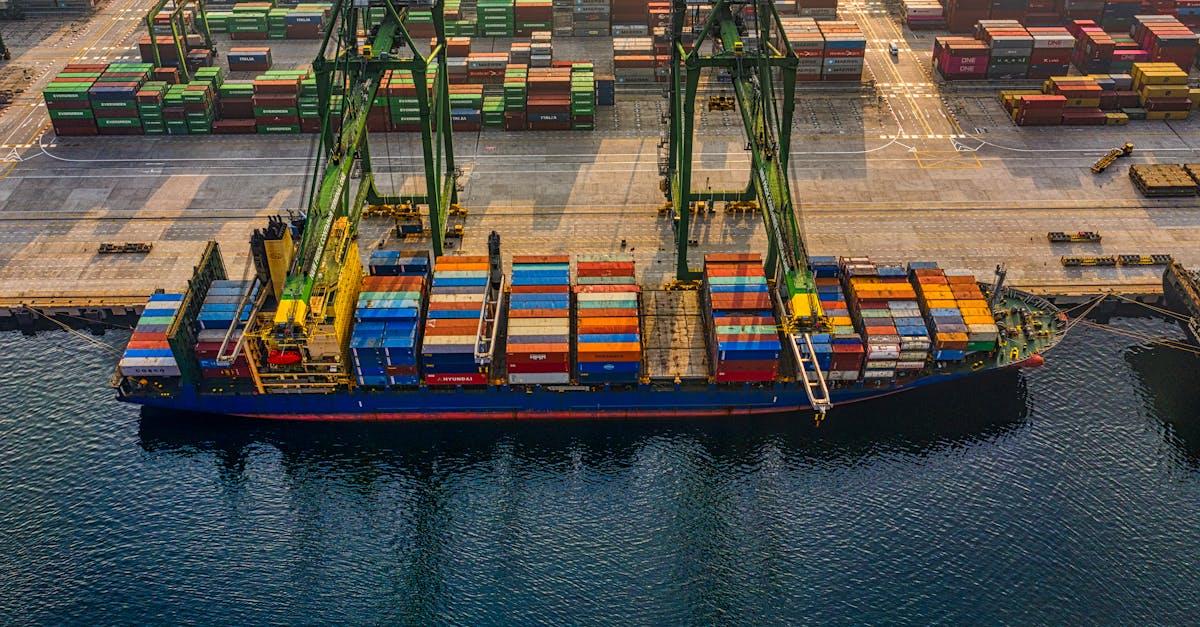
Global supply networks have expanded and intertwined worldwide, yet they often reveal surprising fragility, as disruptions that once stayed local now spread across entire regions. This vulnerability stems not merely from unfortunate incidents but from deliberate structural decisions, evolving risk conditions, and incentives that favor lean, low-cost operations instead of resilient buffers. Grasping the underlying reasons demands examining specific breakdowns, the systemic forces at play, and the practical compromises businesses and governments confront when seeking to reinforce their supply chains.Prominent upheavals that revealed vulnerable pointsCOVID-19 pandemic: Factory shutdowns, labor shortages, and demand swings in 2020–2022 caused shortages across medical supplies,…
Read More
Why debt limits global crisis response

Why National Debt Curbs Global Emergency Efforts

Debt stands as a potent fiscal limitation, and when nations, institutions, or households shoulder substantial debt loads, their capacity to deploy resources swiftly and effectively in the face of pandemics, climate-related catastrophes, refugee surges, or financial upheavals becomes severely weakened; operating through several channels that include shrinking fiscal room, elevating borrowing costs, imposing austerity via conditional measures, and triggering coordination breakdowns among creditors, debt amplifies these pressures during crises, transforming localized strain into extended global fragility.How debt restricts crisis response capabilities: the underlying mechanismsLoss of fiscal space: High debt service obligations (interest and principal repayments) divert government revenue away from…
Read More
Why climate lawsuits are increasing worldwide

Global Surge in Climate Lawsuits: Explained

Societies are increasingly turning to the courts to confront climate change, and the past decade has seen a sharp rise in climate‑related litigation fueled by escalating impacts, more robust scientific links between emissions and damage, evolving legal arguments, activist tactics, and changes in corporate and financial governance; this article outlines the primary drivers behind these cases, the legal avenues plaintiffs pursue, key illustrative examples, emerging geographic trends, and the practical implications for governments, businesses, and communities.Core drivers behind the rise in climate litigationMore robust scientific attribution: Progress in attribution research and climate modeling increasingly enables experts to connect particular extreme…
Read More
What safeguards exist in modern nuclear power

Exploring the Resurgence of Nuclear Energy Debate

Nuclear power has re-emerged as a central topic in public and policy debates worldwide. Multiple intersecting forces — climate targets, energy security concerns, technological advances, market signals, and shifting public opinion — have combined to bring nuclear energy back into focus. The discussion is no longer purely ideological; it now centers on practical trade-offs and how to achieve deep decarbonization while maintaining reliable electricity supplies.Key drivers behind renewed attentionClimate commitments: Governments and corporations aiming for net-zero emissions by mid-century face the need for large amounts of firm, low-carbon electricity. Nuclear’s near-zero operational CO2 emissions make it a candidate for supplying…
Read More
Why oceans matter for climate and for the economy

How Oceans Impact Our Climate and Financial Future

Oceans serve as the world’s leading force in regulating climateThe global ocean spans about 71% of Earth’s surface and functions as the planet’s chief climate moderator, absorbing and redistributing heat and carbon to soften temperature fluctuations, shape weather systems, and maintain essential life-supporting biogeochemical processes. Two key functions are especially notable.Heat storage: The ocean has taken up the vast majority of excess heat from greenhouse gas emissions—commonly estimated at over 90% of the planet’s stored excess heat—slowing atmospheric warming but creating long-term thermal inertia that locks in future change.Carbon sink: The ocean absorbs a large fraction of human-emitted CO2—roughly a…
Read More
How standards shape trade and who gets locked out

Trade Dynamics: How Standards Create Access or Exclusion

Standards are the rules, specifications, testing methods and conformity procedures that determine what products and services must be like to enter a market. They range from technical specifications for a household appliance to sanitary rules for meat, to data-protection protocols, to private sustainability labels imposed by multinational buyers. By reducing information asymmetries and improving interoperability, well-designed standards can lower transaction costs, build consumer trust, and expand trade. At the same time, standards can be deployed — intentionally or not — as barriers that exclude competitors, fragment markets, and reshape global value chains. The distributional effects are profound: who benefits, who…
Read More
What critical minerals are and why they’re contested

Critical Minerals: Essential Resources, Endless Conflicts

Critical minerals are naturally occurring elements and compounds that modern economies depend on for manufacturing, energy transition, and defense, but that face concentrated or fragile supply chains. Governments and analysts typically assess criticality by weighing two dimensions: the mineral’s economic importance for key technologies and the risk that supply will be disrupted. That combination — high demand and high vulnerability — is what makes a mineral “critical.”Why they matter nowAs the world accelerates toward electrification, renewable power, digital networks and sophisticated defense technologies, the need for specific minerals has surged. Lithium, cobalt, nickel and graphite form the backbone of modern…
Read More
What’s failing in the global plastics response

Global Plastic Crisis: Why Current Responses Are Failing

Global efforts to address plastics have delivered limited progress, while numerous challenges persist. Production keeps climbing, waste management remains underfunded, policies lean too much on voluntary measures from industry, and many touted technical solutions fail to confront the underlying drivers. Consequently, plastic pollution continues to intensify, fossil-fuel dependencies deepen, and social and environmental damages grow—most acutely in low- and middle-income countries.Failure 1 — Production keeps growing while policy focuses on end-of-lifeThe conversation remains tilted toward waste management and recycling while production of new plastics marches upward. Global production is on the order of hundreds of millions of tonnes per year…
Read More
What happens when countries restrict food exports

Why Countries Restrict Food Exports: A Global Analysis

When a nation limits the export of essential foods or critical agricultural inputs, the impact spreads through markets, households, governments, and international relations. Export restrictions can take the form of complete prohibitions, licensing requirements, increased export duties, quota limits, or procedural delays. While these actions often aim to shield domestic consumers or steady local prices, they also trigger effects that reach past national boundaries and last well beyond the immediate period.Mechanisms and Their Prompt Market ImpactReduction in global supply: When one or several exporters curb their outgoing shipments, the overall volume available worldwide declines, and for commodities with tight supply-demand…
Read More
Why food security remains fragile

Food Insecurity: Root Causes & Solutions

Food security is the condition in which all people, at all times, have physical and economic access to sufficient, safe, and nutritious food. Despite progress in agricultural productivity and declining child mortality in some regions over recent decades, global food security remains fragile. Multiple interacting drivers — environmental, economic, political, social, and technological — continuously undermine availability, access, utilization, and stability of food supplies. The following analysis explains the main causes, illustrates them with cases and data trends, and highlights practical pathways to reduce fragility.Fundamental factors behind fragilityConflict and instability: Armed conflict remains the foremost force behind severe food insecurity…
Read More